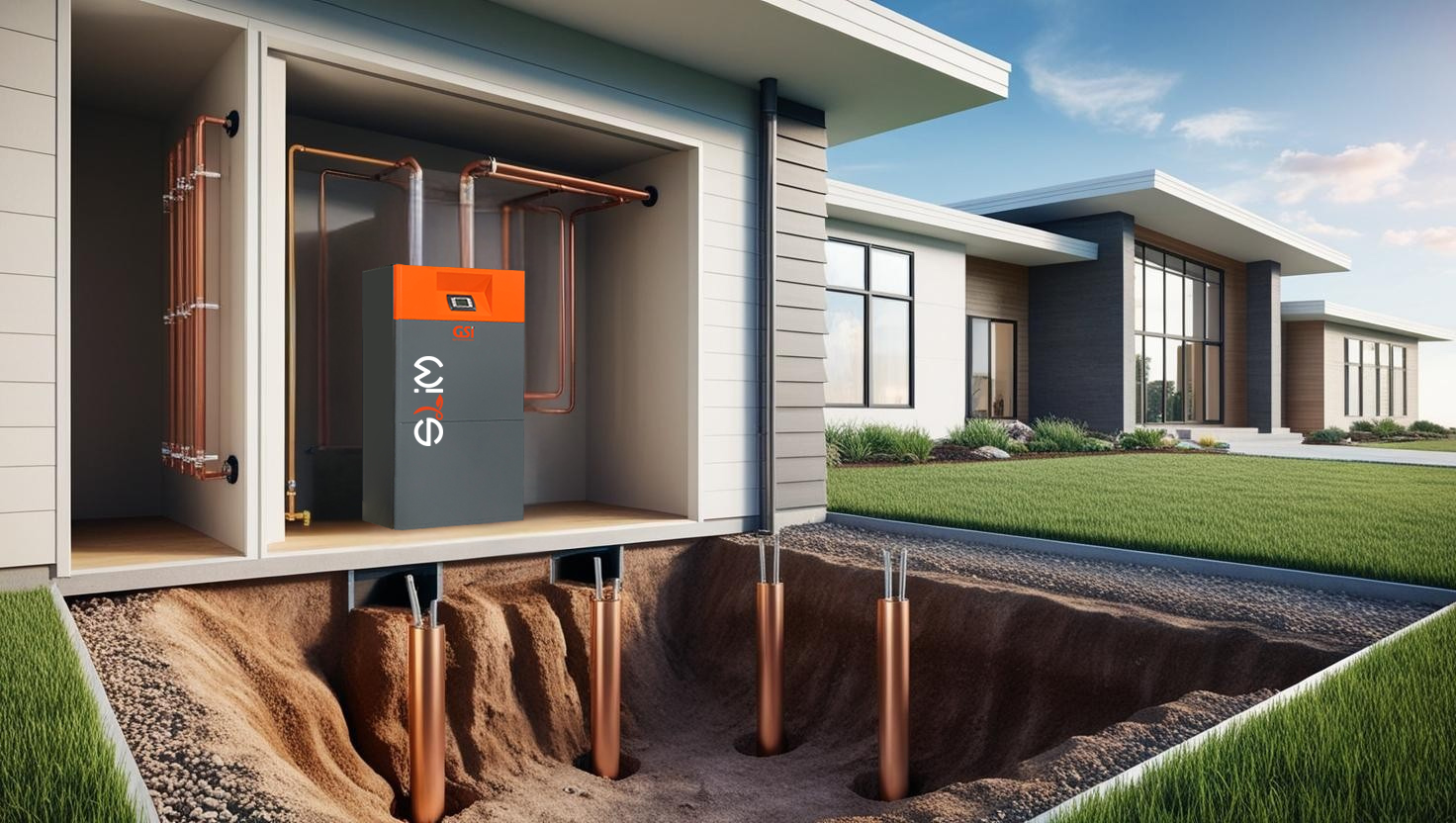
Geothermal systems use the natural heat from the Earth to extract thermal energy. This is a renewable energy source, constant over time and characterized by a very low environmental impact.
Operating principle
The basic principle of geothermal systems consists in extracting the heat present in the subsoil and they can mainly be divided into two categories:
- High-enthalpy geothermal systems: use geothermal resources with temperatures above 150°C, suitable for electricity generation. They are typical of volcanic or tectonically active areas.
- Low-enthalpy geothermal systems: exploit low-temperature heat from the subsoil (between 10°C and 90°C), generally through geothermal heat pumps. They are used for heating and cooling buildings.
Types of low-enthalpy geothermal systems
Low-enthalpy systems are divided into two main categories
– Closed-loop systems
These systems use a heat transfer fluid (usually a mixture of water and glycol) circulating in buried pipes:
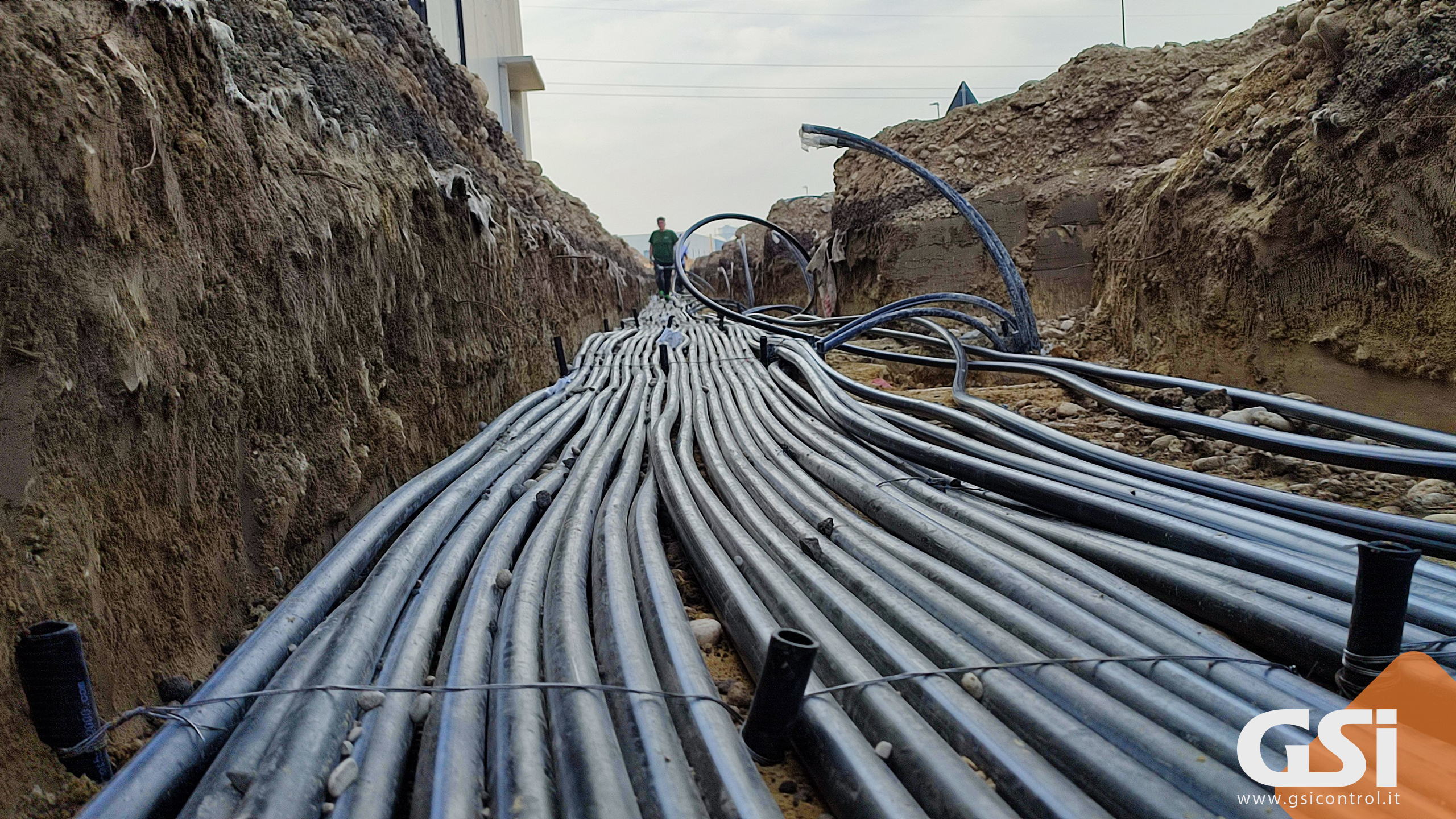
- Horizontal loops: installed at a depth of 1–2 meters, requiring large surface areas.
- Vertical loops: geothermal probes installed at depth (up to 150 m or more), ideal where space is limited.
– Open-loop systems
These systems use groundwater directly as the heat transfer fluid. After heat exchange, the water is reinjected into the ground. They require specific environmental permits and hydrogeological controls.
Main components of a geothermal system
- Geothermal probes (or heat exchangers): allow heat exchange between the ground and the fluid.
- Geothermal heat pump: a thermal machine that transfers heat from the ground to the building in winter, and vice versa in summer.
- Distribution system: can include underfloor heating, fan coils, or low-temperature radiators.
- Control system: regulates temperature and flows according to environmental conditions and user needs.
Advantages of GSI geothermal heat pumps
- High energy efficiency: higher COP (Coefficient of Performance) compared to other systems.
- Reduced CO₂ emissions.
- Low operating costs in the long term.
- Quiet and reliable operation.
- Possibility of integration with photovoltaic systems for a 100% renewable solution.
- Ability to produce domestic hot water (*).
Requirements
- Need for geological studies to assess feasibility.
- Evaluation of regulatory and permitting constraints, especially for systems involving groundwater extraction and reinjection.
Applications
- Residential buildings: single-family homes, apartment buildings.
- Tertiary sector: schools, hospitals, offices.
- Industry: for production processes requiring heating or cooling.
- Geothermal district heating: urban networks supplied by centralized geothermal plants.
Geothermal systems represent a sustainable, reliable, and increasingly widespread technology, in line with European ecological transition objectives. Although the initial investment is higher compared to conventional systems, the efficiency and durability of geothermal installations justify their adoption. Integration with other renewable sources and recent regulatory developments further encourage the spread of this technology.
(*) DID YOU KNOW…
MAGIS is an innovative system integrated into GSI heat pumps that recovers heat normally dissipated by the compressor to produce domestic hot water continuously and automatically, without interrupting indoor comfort. This reduces energy waste and lowers utility bills, ensuring significant economic savings.